Newsletter Subscribe
Enter your email address below and subscribe to our newsletter

 ByJohn A
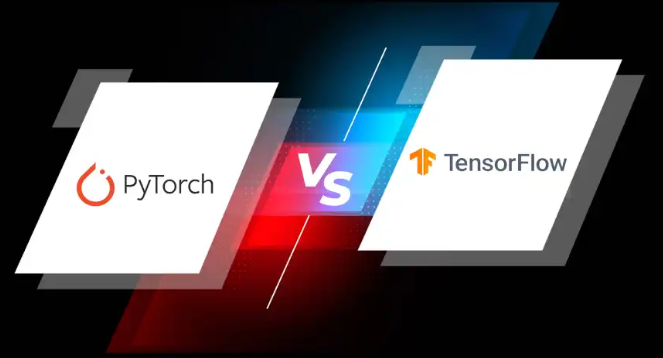
TensorFlow and PyTorch present two distinct paths for ML work. TensorFlow emphasizes deployment maturity, tooling, and scalability, while PyTorch favors flexible experimentation and intuitive imperative coding. Each framework has clear strengths: production pipelines and cross-platform support for TensorFlow; rapid prototyping and dynamic graphs for PyTorch. The choice hinges on goals such as architecture design, debugging ergonomics, and backend flexibility, plus profiling and deployment needs—a balance that invites closer comparison. Practical decisions await the next criterion.
TensorFlow and PyTorch serve similar ends—building and deploying machine learning models—but they differ in emphasis and workflow. The comparison highlights how each favors distinct goals: TensorFlow emphasizes scalable deployment, robust tooling, and production readiness, while PyTorch favors flexible experimentation and intuitive iteration. Consider model design, debugging ergonomics, backend flexibility, and deployment considerations when selecting the framework aligned with objectives.
See also: techdaffer
Building models hinges on API ergonomics, debugging workflows, and the frictionless iteration those aspects enable. Both frameworks offer distinct building APIs and ergonomic debugging approaches, shaping model construction and iteration tempo.
TensorFlow emphasizes explicit graph semantics and structured tooling, while PyTorch prioritizes imperative, intuitive coding. Practitioners value clear ergonomics, robust error messages, and reliable debugging to accelerate disciplined experimentation.
Performance, scalability, and deployment realities reveal how each framework handles real-world workloads and operational constraints.
The comparison highlights concrete performance tradeoffs, where TensorFlow favors throughput and deployment flexibility, while PyTorch emphasizes development speed and dynamic graphs.
Scalability considerations include distributed training, hardware utilization, and model serving.
Both ecosystems demand attention to profiling, optimization, and resource planning for reliable production outcomes.
Ecosystem strength and community activity shape how teams pick frameworks, influence available tooling, and expand edge capabilities beyond core model development. Ecosystem maturity drives standardization, interop, and reliable deployment paths, while tooling breadth enables rapid experimentation, debugging, and production readiness.
PyTorch emphasizes research agility; TensorFlow emphasizes deployment scale. Both ecosystems reward robust libraries, but user freedom grows with mature, well-integrated tooling and cross-platform support.
Licensing differences exist: TensorFlow uses Apache 2.0 with broader corporate-friendliness, while PyTorch follows BSD-style with charitable governance by Facebook (Meta) and PyTorch Foundation. Governance models emphasize openness, community input, and corporate sponsorship.
Rapid prototyping favors PyTorch for research experimentation, offering dynamic graphs and intuitive debugging. It supports quick idea iteration, while TensorFlow emphasizes deployment. Overall, PyTorch is preferred for rapid, exploratory research workflows demanding freedom and responsiveness.
Deployments favor practicality: mobile deployment offers on-device inference with optimized models, while edge runtime enables remote, low-latency processing. The comparison remains disciplined and concise, highlighting trade-offs in security, updates, and portability for freedom-seeking developers.
Memory management and performance debugging tips across both frameworks emphasize profiling, reducing allocations, and pinning memory. They advocate steady instrumentation, language-agnostic tooling, disciplined batching, and careful memory reuse to sustain predictable, scalable inference and training performance.
Multimodal ecosystems favor rapid prototyping with robust reinforcement learning support, yet licensing governance and deployment options vary; memory management and performance debugging remain key. The audience seeking freedom should weigh mobile edge capabilities and practical deployment.
In sum, TensorFlow emphasizes deployment readiness, tooling maturity, and scalable production workflows, while PyTorch emphasizes flexible experimentation, intuitive coding, and rapid prototyping. Teams weighing goals should weigh architecture design, debugging ergonomics, and backend flexibility against profiling, distributed training, and ecosystem maturity. Align choices with objective trajectories: deploy and monitor smoothly, or iterate quickly and refine concepts with agility. Prioritize real-world needs, measure tradeoffs, and select the framework that best advances the project’s practical goals.